Goodbye Jane Goodall, the people of our planet bid a tearful farewell
Dame Jane Goodall's life was a testament to the power of observation, compassion, and tireless advocacy. Her journey from a young woman with...
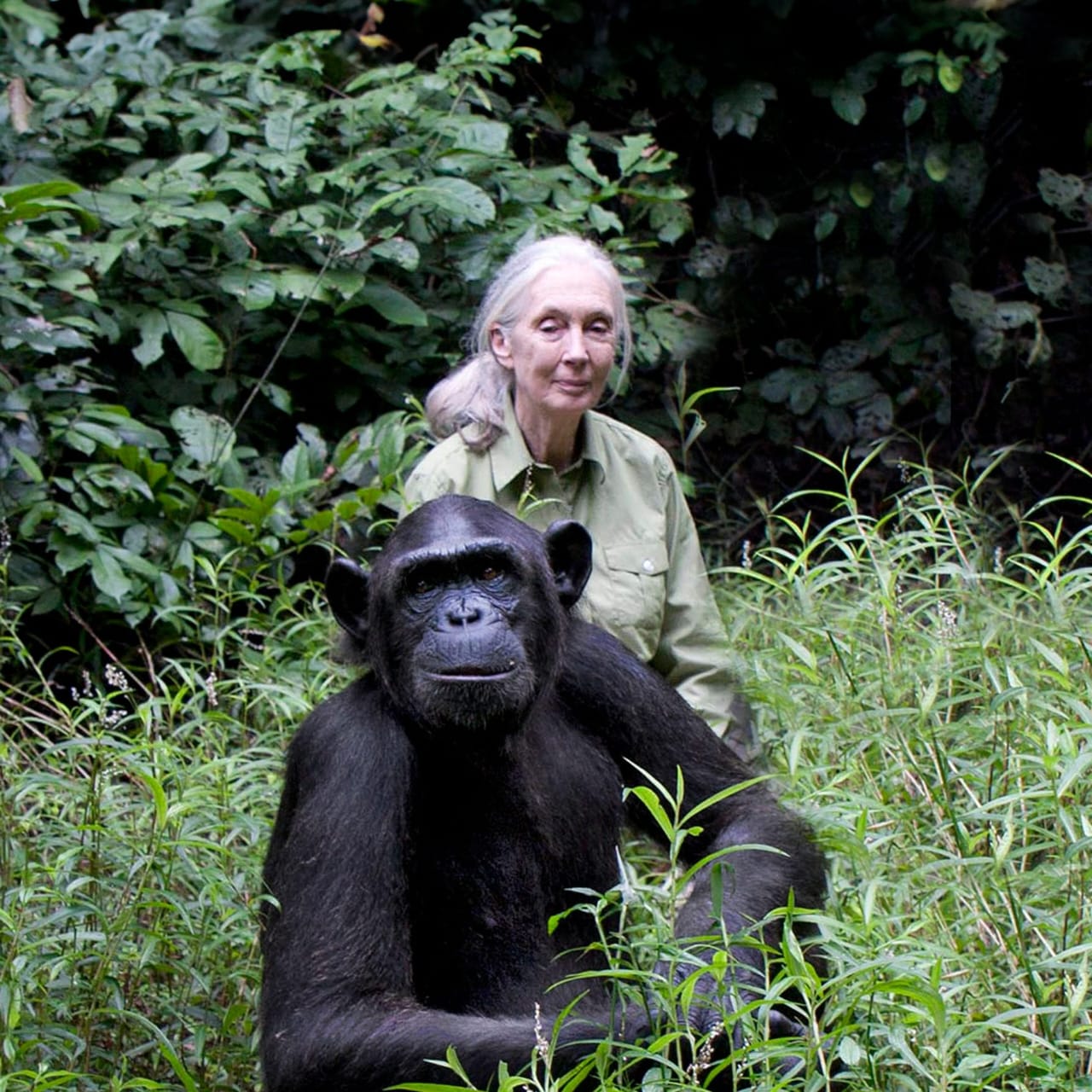
Dame Jane Goodall's life was a testament to the power of observation, compassion, and tireless advocacy.
Her journey from a young woman with no formal scientific training to a world-renowned primatologist and environmental icon fundamentally transformed our understanding of the animal kingdom and the urgent need for conservation.
Early Life and the Call of Africa
Born in London in 1934, Jane Goodall's childhood was marked by a deep and early fascination with animals. She was famously gifted a life-sized stuffed chimpanzee, named Jubilee, by her father, a toy that fueled her lifelong dream of living with and writing about wild animals in Africa—a dream she carried through reading books like Tarzan of the Apes.
In 1957, having saved up money by working as a secretary, Goodall traveled to Kenya. There, she met the famous paleoanthropologist Dr. Louis Leakey, who hired her as an assistant, convinced of her patience and passion. Leakey believed that a long-term study of a great ape could provide crucial insights into early human behavior, and in 1960, he helped secure funding for Goodall to begin her study of wild chimpanzees at the Gombe Stream National Park in Tanzania.
The Gombe Revolution:
Groundbreaking Discoveries
Goodall's approach to studying chimpanzees was radical and unconventional for the time, a fact that initially drew skepticism from the scientific community since she had no university degree.
Challenging Scientific Norms
Ignoring traditional scientific detachment, Goodall immersed herself in the chimpanzee community. She broke with convention by:
Giving the chimpanzees names (like David Greybeard and Goliath) instead of numbering them, stressing their individuality.
Allowing herself to be accepted by the chimpanzees, a patient process that involved simply being present, which eventually led to trust and incredible proximity.
The Tool-Maker
Her most famous discovery came early in 1960, when she observed a chimpanzee she called David Greybeard stripping leaves from a twig to fashion a tool, which he then used to "fish" for termites in a mound.
Upon hearing the news, Dr. Leakey sent her a now-famous telegram that said: "Now we must redefine man, redefine tool, or accept chimpanzees as human." This single observation overturned the long-held scientific belief that only humans made and used tools, bridging the supposed unbridgeable gap between humans and the rest of the animal kingdom.
A Complex Social World
Over the decades of her research, Goodall's work revealed the complex, emotional, and social lives of chimpanzees. Her discoveries included:
Complex Social Structures: Observing lifelong family bonds, nurturing mother-child relationships, and hierarchical dominance.
Emotional Depth:
Documenting behaviors like grief, joy, fear, and even a "dark side," including brutal warfare between different chimpanzee communities.
Dietary Habits:
Discovering that chimpanzees are omnivorous, not strictly vegetarian, including hunting and eating smaller monkeys. In 1962, Leakey convinced Cambridge University to accept Goodall as a Ph.D. candidate, and she earned her doctorate in ethology in 1966, despite not having an undergraduate degree.
The Shift to Activism and Global Advocacy
By the mid-1980s, after attending a conference on chimpanzees, Goodall realized that her beloved subjects were facing grave threats from habitat loss, poaching, and illegal wildlife trade. This pivotal moment prompted her to leave her primary role as a researcher and embrace the path of a global activist. She began traveling the world for an average of 300 days a year, speaking to packed audiences, world leaders, and school children about the plight of animals and the environment.
The Jane Goodall Institute (JGI)
In 1977, she founded the Jane Goodall Institute (JGI) to continue the Gombe research and, more importantly, to expand her conservation and development efforts worldwide. JGI is a global leader in protecting chimpanzees and their habitats, emphasizing community-centered conservation (often referred to as "Tacare," meaning "take care" in the local dialect).
Roots & Shoots: A Message of Hope
A cornerstone of her legacy is the Roots & Shoots program, which she founded in 1991.
What it is: A global youth-led community action and education program.
Its Goal: To foster respect and compassion for all living things and empower young people (from preschool to university) to take action to make the world better for people, animals, and the environment. The Philosophy: Goodall's enduring message of hope was rooted in the potential of young people, the resilience of nature, and the power of the human spirit. She emphasized that "Every individual makes a difference." A Lasting Legacy Jane Goodall received countless honors throughout her life, including being named a Dame Commander of the Order of the British Empire (DBE) and a United Nations Messenger of Peace. Her life and work irrevocably changed science and inspired generations to view themselves as interconnected with the natural world. She died on October 1, 2025, while still on a speaking tour, embodying her dedication to her final message of courage and hope until the very end. Her "tearful adieu" is not one of sorrowful finality, but of profound gratitude for a life spent dedicated to conservation and the promise of a better future.