Bijoya Dashami
Sreerupa
October 2, 2025
Prepare your heart to receive the sublime beauty of Bijoya Dashami, a sacred observance in West Bengal that tears the veil between the temporal and the divine; it is a profound, soul-stirring spiritual activity across the earthly realm, culminating in an ocean of spiritual fervor.
Why is it Called 'Bijoy Utsav'? (The Festival of Victory)
The word 'Bijoy' means Victory, and 'Utsav' means Festival. It is named the Festival of Victory because it marks the glorious, climactic moment when Ma Durga, the Universal Mother, destroyed the demon Mahishasura after a fierce, nine-night battle.
This victory is celebrated as the absolute, eternal triumph of Dharma (Righteousness) over Adharma, of Light over Darkness. In Bengal, the divine energy of Shakti is worshipped with unique passion, and this final day is a primal scream of joy for her supremacy. It affirms the devotee's faith that no evil—internal or external—can withstand the Mother's fierce, protective love.
The Bengali heart bursts with this sense of victory, declaring to the universe the ultimate truth: Goodness always prevails.
The Divine Farewell: Intense Emotion and Spirit
Bijoya Dashami is a day of sacred paradox: the weeping farewell to the Mother's form, and the exultant embrace of her everlasting spirit.
The Poignant Visarjan: A River of Tears and Trust
The most intensely emotional rite is the Durga Visarjan (Immersion). This is the moment when the magnificent, lovingly-created clay idol is surrendered to the waters. It is the tearful departure of the daughter, Uma, returning to her eternal abode in Mount Kailash.
Imagine the divine beauty: the drums beat a frantic rhythm, guiding the Mother to the riverbank, where devotees watch in sacrificial grief as the beloved form melts back into the formless. Yet, woven into this sorrow is a deep spiritual certainty: the Mother's love is omnipresent, and though the form dissolves, her Shakti (power) remains, assuring her return in the following year.
This act is the ultimate lesson in detachment and cyclical renewal—that beauty must fade, yet truth endures.
Sindoor Khela: The Scarlet Sacrament of Blessings
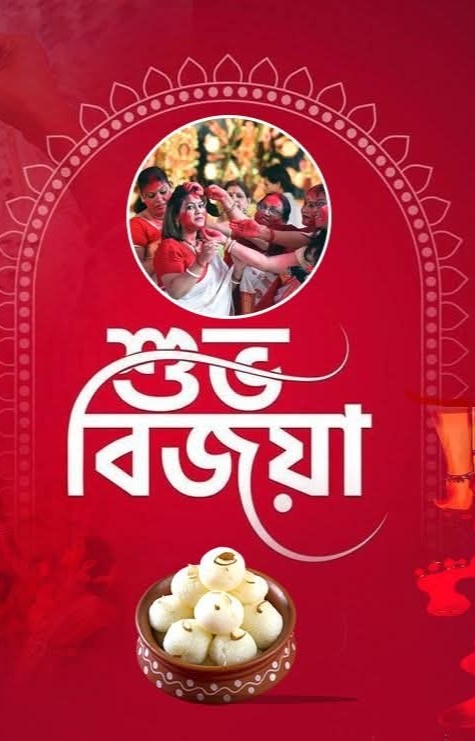
Before the Mother departs, the beautiful married women gather for Sindoor Khela (Vermillion Play). Their faces shine with devotion as they lovingly daub the Mother’s feet and forehead with scarlet sindoor, the sacrament of marriage and auspiciousness.
This is a beautiful, unrestrained display of feminine spiritual power. They then rush to lovingly smear the blessed vermillion on one another, their laughter and tears mingling in a vibrant, unforgettable tableau.
Every touch is a prayer, a fervent wish for eternal marital bliss, the longevity of their husbands, and the unending cascade of the Mother's grace upon all homes.
Shubho Bijoya: The Embrace of a Purified Heart
Following the divine farewell, the human community celebrates its own victory over ego and separation with Shubho Bijoya (Happy Victory greetings).
The air fills with the sweet scent of new beginnings and forgiveness. It is a sacred command: let all differences, all resentments, dissolve with the departing Goddess.
The Kolakuli (the deep, ritual embrace) shared by peers is an act of profound spiritual reconciliation, sealing the bonds of brotherhood under the Mother's triumphant banner. When the young perform Pranam (bowing) to the elders, they are symbolically drawing down the ancestral wisdom and blessing, completing the circle of tradition, love, and victory.
Bijoya Dashami is truly the heart of Bengal—a spiritual symphony that orchestrates sorrow and surrender into an overwhelming, victorious faith.